
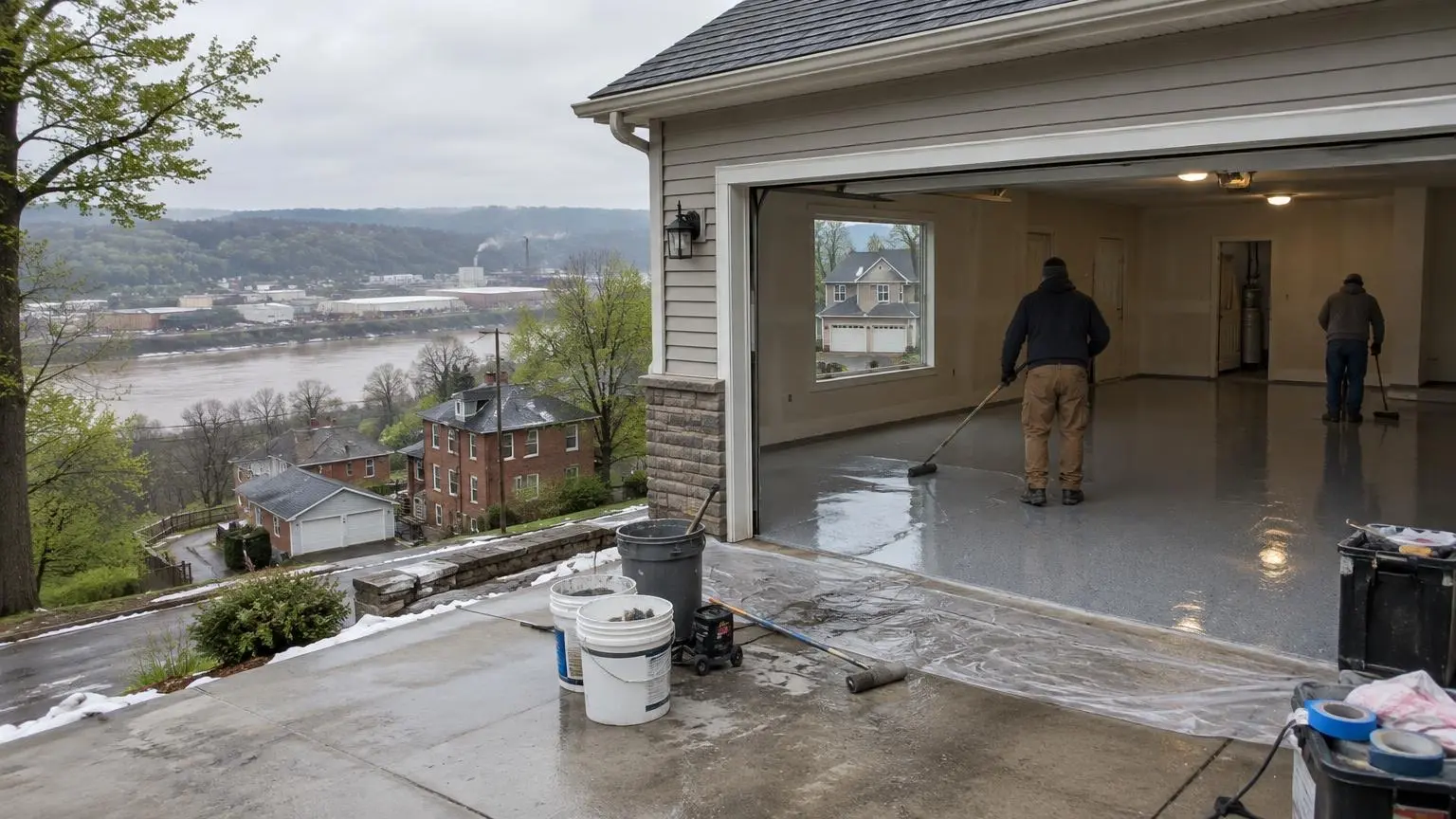
Warehouses, shops, kitchens and production floors
Commercial Epoxy Flooring in Cincinnati, OH
Industrial resin systems for concrete that carries forklifts, carts, chemicals and constant foot traffic.
- No-cost estimate at your place, including a moisture reading on the concrete before any system is suggested
- A quote on paper itemizing surface prep, each coat and the final total
- Surface prep explained up front: grinding, crack repair and old coating removal
Concrete Floor Coating for Cincinnati's Working Spaces
Commercial epoxy flooring is about keeping a business moving. In Cincinnati that covers a wide range of spaces, from a corner restaurant kitchen to a warehouse aisle to a machine shop floor. Wikipedia lists consumer goods, retail, aerospace, financial services and business services among the region's main sectors, with Fortune 500 companies such as Kroger, Procter & Gamble, GE Aerospace, Cintas and Fifth Third headquartered in the area. The suppliers, distributors and service businesses around them all run on concrete floors, and those floors take a beating.
Why bare concrete is a problem at work
Uncoated concrete dusts, stains and absorbs. In a warehouse, dust settles on product and gets into equipment. In a kitchen, grease and food waste soak into the slab and are hard to sanitize. In a shop, oil and coolant leave slick, permanent stains. A seamless concrete floor coating seals the surface, makes it far easier to clean, brightens the space by reflecting light, and lets you mark aisles and safety zones directly on the floor.
Systems we use
Commercial floors need more than a garage coating:
- High-build 100% solids epoxy for warehouses and light industrial floors that see carts, pallet jacks and forklifts.
- Broadcast quartz or flake systems for traction in wet areas, break rooms, locker rooms and restrooms.
- Polyaspartic topcoats where a business can only close briefly, or where sun and abrasion are factors.
- Chemical-resistant topcoats for areas that see cleaners, oils, solvents or food acids.
- Coved edges that run the coating up the wall base so floors can be hosed and squeegeed.
Industrial floors and heavy traffic
Industrial floors fail in specific ways. Forklift wheels grind at turns, steel carts chip joints, dropped parts dent thin coatings, and chemicals soften the wrong topcoat. We look at how your floor is used before we choose a system: what rolls on it, what spills on it, how it is cleaned and how often. Sharonville's Ford transmission plant, which Wikipedia describes as having 2.4 million square feet of shop floor, shows the scale of floor space industry in this region depends on. Most of our commercial work is smaller, but the same rules apply: thickness, bond and the right topcoat for the traffic.
Planning around downtime
Coating a commercial floor means the space is out of use for a while, so scheduling is part of the job. Big floors can be split into phases, done after hours or on weekends, and finished with fast-curing polyaspartic where a quick return matters. Bob Vila's polyaspartic guide says that with this kind of system a business might be shut for as little as a day or two. Ahead of the work, we put in writing which areas close when, how long each stays closed, and when equipment and staff can return.
Prep on commercial slabs
Commercial concrete often carries years of contamination: oil soaked into the slab, old floor paint, sealers, adhesive from removed tile, and expansion joints full of debris. We remove it with diamond grinding or shot blasting, clean joints out, and repair spalls and cracks. We test for moisture, since slabs on grade without an effective vapor barrier can push moisture up under a coating. On older buildings, that testing is never skipped.
Safety and markings
A coated floor is a good place to mark traffic aisles, pedestrian walkways, forklift lanes, keep-clear zones around panels and equipment, and parking or staging areas. We can build anti-slip texture into wet areas and around entries. Lighter floor colors also brighten a building, which can make a dim warehouse or shop easier to work in.
Commercial Floor Services
Each commercial floor is specified for its traffic, chemicals, cleaning routine and downtime limits.
Warehouse and distribution floors
High-build epoxy systems for aisles, docks and storage areas that see pallet jacks and forklifts.
Manufacturing and machine shops
Chemical- and impact-resistant coatings for production areas, oil, coolant and dropped parts.
Commercial kitchens
Seamless, textured floors with coved edges that can be washed down and sanitized.
Retail, office and lobby floors
Solid, flake or metallic finishes that look clean and take steady foot traffic.
Auto and service bays
Oil- and fluid-resistant systems for repair shops, dealer service lanes and fleet garages.
Line striping and safety marking
Aisles, walkways and keep-clear zones coated directly into the floor system.
Phased and after-hours work
Large floors split into sections or done nights and weekends to limit downtime.
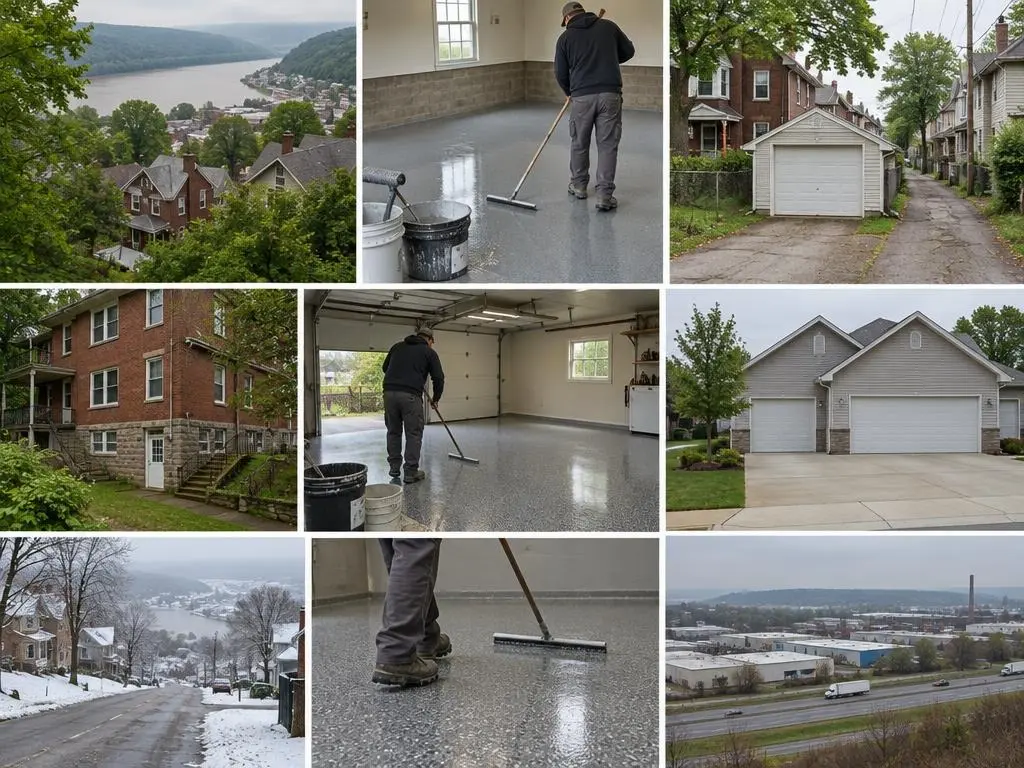
Typical Commercial Coating Costs
| Item | Published range | Source |
|---|---|---|
| Commercial or industrial 100% solids system | $12+ per sq ft | HomeAdvisor |
| Professional epoxy, per sq ft | $3 to $12 | This Old House |
| Polyaspartic, per sq ft | $5 to $12 | HomeGuide |
| High-grade coating upgrade | Adds 20% to 30% | HomeAdvisor |
| Typical contractor minimum | $500 to $1,000 | HomeAdvisor |
These are national figures for comparison only. Commercial pricing depends heavily on square footage, slab contamination, joint and crack repair, the system's thickness and after-hours scheduling. We quote every commercial floor in writing, and that quote is the price.
How a Commercial Floor Project Runs
1. Site survey
We walk the space, test the slab, and learn what rolls on it, what spills on it and how it is cleaned.
2. Specification and schedule
A written quote with the system, thickness, prep and a phasing plan that fits your operating hours.
3. Prep
Grinding or shot blasting, joint cleaning, crack and spall repair.
4. Install
Primer, body coats, broadcast where needed, markings and topcoat, with conditions checked before each layer.
5. Return to service
We confirm when foot traffic, equipment and vehicles can return to each area.
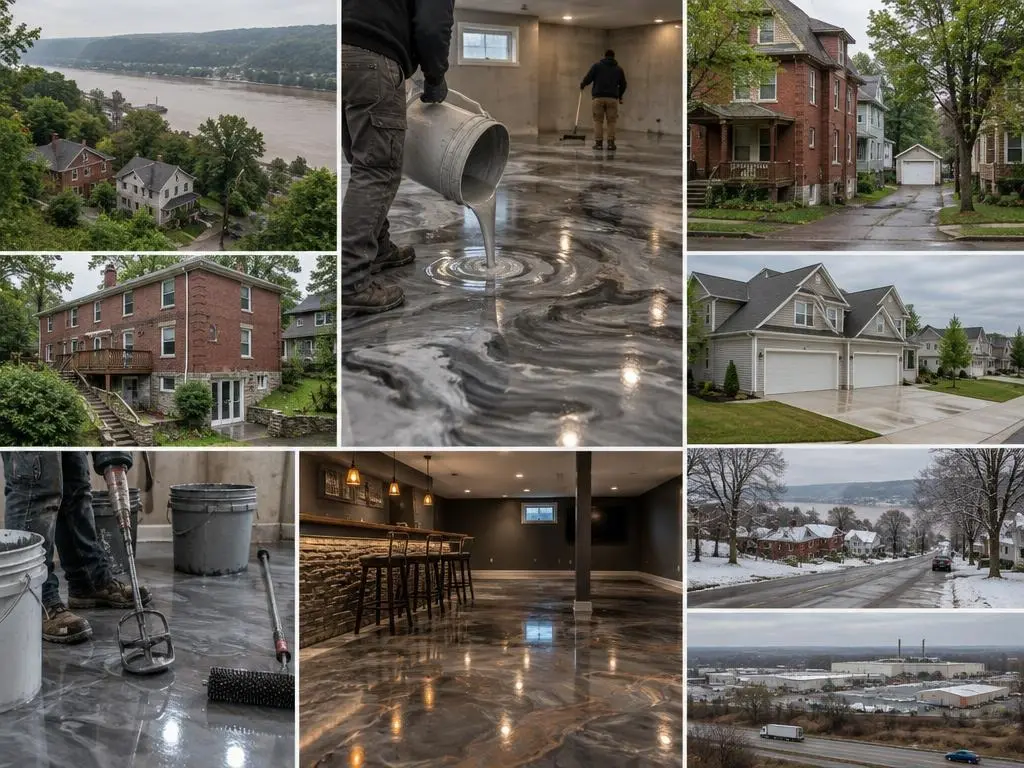
Why Choose Us for Commercial Epoxy Flooring
Specified for your traffic
We choose thickness and topcoat based on forklifts, carts, chemicals and cleaning, not a one-size system.
Downtime planned up front
Phasing, night and weekend work and fast-cure options are agreed in writing before work starts.
Prep matched to old slabs
Contaminated and older commercial slabs are ground, cleaned and tested before any coating goes on.
One clear quote
Square footage, prep, each layer, markings and schedule are spelled out, with changes approved in writing.
Commercial Epoxy Flooring Questions
What does commercial epoxy flooring cost?
For 100% solids commercial or industrial systems, HomeAdvisor's figure is $12 or more per square foot. Floor size, contamination, repairs and how the work is scheduled set the final cost. We give every commercial job a written quote after a site survey.
Will we have to shut down for the install?
It depends on the system and floor size. Bob Vila's guide notes polyaspartic systems may only require closing for a day or two. Large floors can be phased in sections or done after hours, keeping some of the space in use.
Can epoxy handle forklift traffic?
A properly specified high-build system on well-prepared concrete is made for forklift and pallet jack traffic. Turning areas and joints get extra attention, since that is where wheels wear coatings fastest.
Can you coat a commercial kitchen floor?
Yes. Kitchens need a textured, seamless surface that can be washed down, usually with coved edges at the walls. Grease-soaked concrete has to be cleaned and ground thoroughly first so the coating bonds.
Do you add safety striping and aisle markings?
Yes. Aisles, walkways and keep-clear zones can be laid into the resin itself, so the markings last as long as the floor rather than being taped or painted on later.
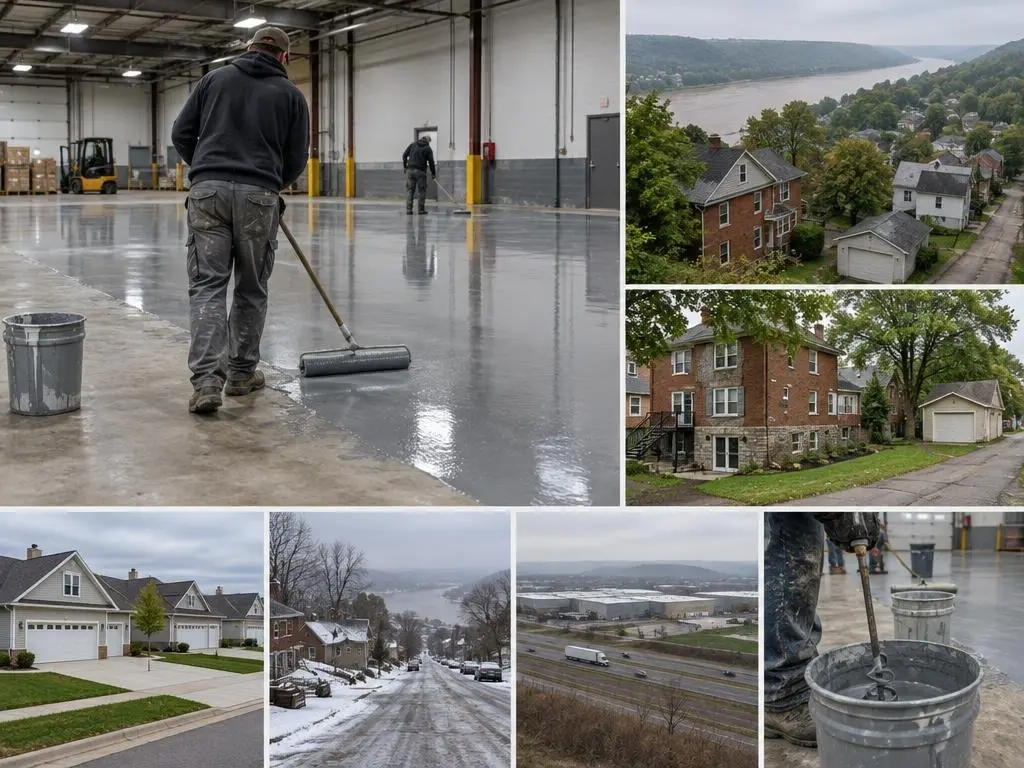
Commercial Epoxy Flooring Service Areas
- Epoxy Flooring in Cincinnati, OH
- Epoxy Flooring in Mason, OH
- Epoxy Flooring in West Chester Township, OH
- Epoxy Flooring in Blue Ash, OH
- Epoxy Flooring in Sharonville, OH
- Epoxy Flooring in Montgomery, OH
- Epoxy Flooring in Loveland, OH
- Epoxy Flooring in Indian Hill, OH
- Epoxy Flooring in Madeira, OH
- Epoxy Flooring in Anderson Township, OH
- Epoxy Flooring in Milford, OH
- Epoxy Flooring in Fairfield, OH
- Epoxy Flooring in Springdale, OH
- Epoxy Flooring in Forest Park, OH
- Epoxy Flooring in Norwood, OH
- Epoxy Flooring in Wyoming, OH
- Epoxy Flooring in Lebanon, OH
- Epoxy Flooring in Liberty Township, OH
- Epoxy Flooring in Green Township, OH
- Epoxy Flooring in Colerain Township, OH
- Epoxy Flooring in Delhi Township, OH
- Epoxy Flooring in Covington, KY
- Epoxy Flooring in Florence, KY
- Epoxy Flooring in Fort Thomas, KY
- Epoxy Flooring in Union, KY
Get a Commercial Epoxy Flooring Estimate
Site surveys and written quotes for commercial floors across Greater Cincinnati and Northern Kentucky.